Choosing the 2026 Best Smart Dumbbell Set requires more than comparing weight ranges and app features. A modern Smart Dumbbell Set can track repetitions, suggest progressive loads, and support guided workouts in small spaces. Yet connected technology does not automatically create better training. The handle must feel secure, the adjustment system must respond quickly, and the selected weight must match your current ability.
Strength coach Dan John often says, “The goal is to keep the goal the goal.” That principle matters here. If your goal is stronger legs, a quieter motor will not replace consistent squats. If your goal is convenient home training, a bulky platform may become frustrating. Small details matter.
This guide examines the features that experienced buyers should check before spending money. We will compare weight capacity, adjustment speed, grip comfort, app accuracy, battery performance, storage needs, warranty coverage, and long-term reliability. We will also consider noise, because a loud mechanism can disturb early-morning workouts or nearby family members.
Real testing matters.
Some product claims sound impressive but remain difficult to verify. Sensor accuracy may vary between exercises, and subscription costs can change the total ownership price. A smart display may also encourage unnecessary data tracking. That is not always useful.
The strongest choice should feel dependable during ordinary training, not only during a polished demonstration. This guide aims to separate meaningful innovation from expensive decoration. It may not identify one perfect set for everyone, because body size, training history, budget, and available space all influence the decision. Still, it can help readers choose with clearer expectations and fewer regrets.
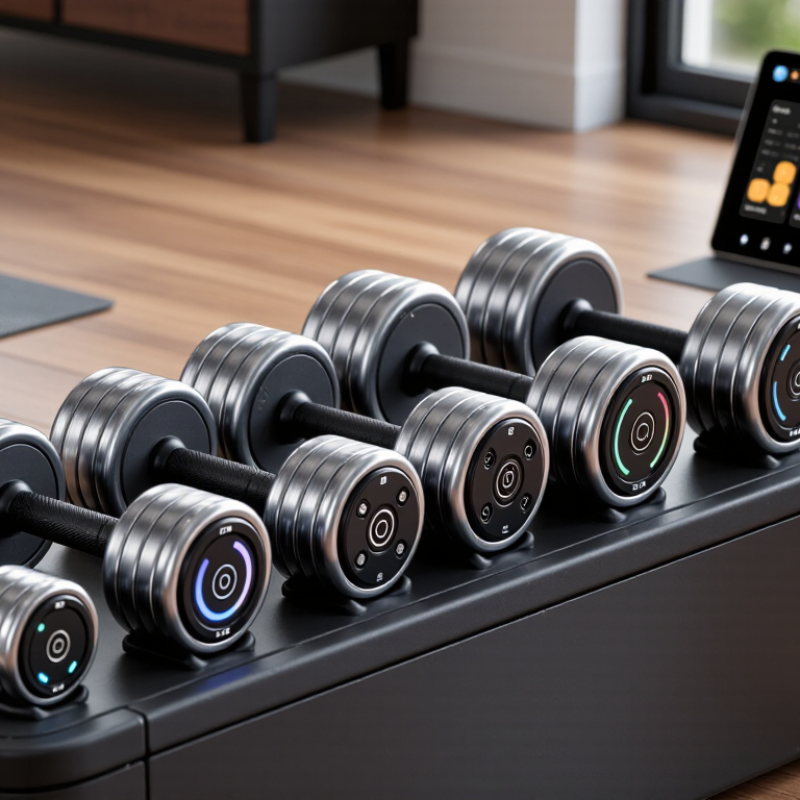
The 2026 smart dumbbell market is splitting into four practical categories: selectable mechanical weights, electronically controlled resistance, sensor-enabled dumbbells, and app-linked training systems. Mechanical sets change plates with a dial or locking mechanism. They are usually simpler, quieter, and easier to repair. Electronic models adjust resistance through motors or digital controls. Their convenience is attractive, but battery life and software support deserve close inspection.
Sensor-enabled sets measure repetitions, lifting speed, range of motion, and sometimes symmetry. App-linked systems add guided sessions, progress charts, and adaptive programming. This direction matches the American College of Sports Medicine’s 2025 Worldwide Survey of Fitness Trends, which placed wearable technology first and mobile exercise applications second. The Global Wellness Institute also estimated the physical activity economy at about 1.1 trillion dollars in 2023. Technology clearly has momentum. Yet data is not coaching. A repetition count can be accurate while technique remains poor.
Tips: Check the minimum weight, maximum load, handle diameter, noise, charging method, and offline usability. Test one slow curl and one controlled squat. Watch for delayed resistance changes. Also, read the privacy policy. Some systems collect more movement data than expected. The category remains imperfect; attractive screens can hide limited exercise variety, weak sensors, or expensive subscriptions. A reliable buying decision should favor stable mechanics, clear measurements, and training features you will actually use.
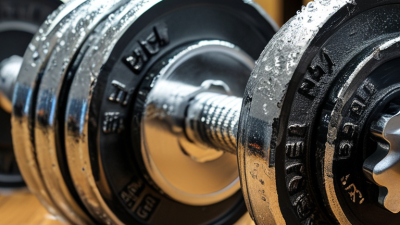
A practical comparison of the main smart dumbbell categories, resistance systems, connected features, and suitable training scenarios.
| Market category | Typical resistance range per dumbbell | How resistance changes | Smart technology | Best training use | Main advantages | Key limitations |
|---|---|---|---|---|---|---|
| Manual adjustable dumbbell | About 2.5–50 lb (1–22.7 kg) | Weight plates, collars, or threaded handles are changed by hand. | Usually none; optional workout logging through a separate mobile app or fitness tracker. | Strength training, hypertrophy, and users who want low purchase cost. | Low technology risk, broad weight availability, simple maintenance, and no charging requirement. | Slow weight changes, loose components can create noise, and workout data is not captured automatically. |
| Selectorized smart dumbbell | About 5–50 lb (2.3–22.7 kg) | A dial, selector pin, or locking mechanism selects a preset load from an integrated weight stack. | Digital weight selection, Bluetooth connectivity, exercise logging, and basic progress records. | Home workouts where fast transitions and compact storage are priorities. | Replaces several fixed dumbbells, changes weight quickly, and reduces floor-space requirements. | The minimum increment may be relatively large; mechanical locks must be fully engaged before lifting. |
| Electronic motorized dumbbell | Commonly about 5–50 lb (2.3–22.7 kg) | An electronic actuator changes the selected resistance, normally through buttons or a companion app. | Motorized adjustment, display feedback, workout presets, wireless control, and firmware-based features. | Guided circuits, interval workouts, progressive overload, and users who value automation. | Very rapid transitions, precise preset changes, and strong integration with structured workouts. | Higher price, battery dependence, more electronic failure points, and possible app compatibility limits. |
| Load-sensing smart dumbbell | Commonly about 5–80 lb (2.3–36.3 kg), depending on the modular system | The user changes plates or modules manually; integrated sensors measure force, load, or movement. | Force sensors, repetition counting, set detection, tempo measurement, range-of-motion estimates, and wireless data transfer. | Technique tracking, strength testing, rehabilitation support, and performance analysis. | Provides richer training metrics without requiring a motorized weight-selection system. | Sensor accuracy can vary with grip and movement pattern; resistance changes are not fully automatic. |
| App-connected modular dumbbell | About 5–90 lb (2.3–40.8 kg), depending on the plate configuration | Physical plates are added or removed, while the app manages the workout plan and records the selected load. | Bluetooth or Wi-Fi connection, exercise libraries, training plans, progress dashboards, and session history. | Users who want guided programming but still prefer conventional mechanical equipment. | Flexible load capacity, detailed digital records, and access to structured training content. | The app may not verify the actual load; subscription requirements and phone dependence can increase ownership cost. |
| Connected fixed-weight dumbbell pair | Usually about 2.5–30 lb (1–13.6 kg) | The resistance is fixed; users switch between multiple pairs or combine the system with other equipment. | Motion sensors, repetition counting, workout timers, form prompts, or synchronization with a mobile device. | Fitness classes, conditioning, light strength work, and beginners learning exercise technique. | Simple handling, stable feel, fewer mechanical moving parts, and intuitive class-based training. | Limited maximum load and greater storage requirements when several weight pairs are needed. |
| Technology or specification | What it measures or controls | Buying consideration |
|---|---|---|
| Bluetooth connectivity | Transfers workout data between the equipment and a nearby smartphone or tablet. | Check device compatibility, connection stability, and whether offline training is supported. |
| Repetition and set tracking | Counts repetitions and may identify sets, rest intervals, and exercise duration. | Sensor readings can be affected by partial repetitions, fast tempo, and exercises that look alike. |
| Force or load sensing | Estimates applied force, lifting load, or changes in effort during a movement. | Useful for progress tracking, but it should not be treated as a medical-grade measurement. |
| Digital resistance display | Shows the selected weight, resistance level, repetitions, or training interval. | A clear display and tactile controls are important when the user is exercising away from the phone. |
| Battery and charging system | Powers sensors, displays, wireless communication, and motorized weight adjustment. | Prefer a usable non-connected mode and confirm charging time, battery replacement policy, and standby life. |
| Training software | Provides exercise demonstrations, programs, progress charts, timers, and coaching prompts. | Review whether core tracking works without a subscription and whether data can be exported. |
Data note: Resistance figures are typical market ranges for 2026 product categories and vary by configuration. Actual smart features, measurement accuracy, battery life, connectivity, and software access depend on the specific model and operating environment.
A smart dumbbell set should support progressive overload, not merely display a high maximum weight. The American College of Sports Medicine recommends increasing resistance by about 2–10% when you can exceed your target repetitions by one or two. That range is practical, but it is not universal. Beginners often need smaller increases, especially for shoulder presses and lateral raises.
Choose a set with enough range for your strongest movement. A useful home setup might begin near 2.5 or 5 pounds per hand and extend beyond 50 pounds, depending on your training level. Smaller increments matter. A two-pound jump can feel manageable during curls but challenging during overhead work. Look for adjustments below five pounds when possible. Large gaps may force poor form or unnecessary plateaus.
The National Strength and Conditioning Association supports gradual load progression alongside controlled technique and consistent training. Log your repetitions, effort, and completed load after each session. When you reach the top of your repetition range with stable form, increase weight slightly. Do not chase maximums. I would also question overly optimistic range claims, because usable weight depends on the adjustment mechanism and handle balance. Test whether you can change loads quickly without interrupting your workout. A perfect specification can still fail in a crowded living room.
2026 Best Smart Dumbbell Set Buying Guide: Sensor Accuracy, App Metrics, and Bluetooth Standards Buyers Should Check
Sensor accuracy matters more than a polished display. Check whether the dumbbell measures force, movement, or only handle motion. Ask for calibration procedures and repeatability data. NIST measurement guidance emphasizes traceable calibration and stated uncertainty, not impressive but vague accuracy claims. A useful set should count controlled repetitions consistently, even during slower lifts. Test ten curls, pause, and repeat them. The results should remain close. They may not be perfect.
App metrics should support coaching, not create confusion. Look for repetitions, range of motion, lifting tempo, rest time, and left-right balance. ACSM’s Worldwide Survey of Fitness Trends 2025 placed wearable technology among the leading fitness trends, showing strong demand for measurable training. Still, more numbers do not guarantee better decisions. Exportable history is valuable. So is transparent correction when the app misses a repetition. I would distrust a flawless score from an obviously incomplete set.
Bluetooth details deserve careful checking. The Bluetooth SIG 2024 Market Update projects 5.4 billion annual Bluetooth device shipments by 2028, but a newer version number alone does not ensure a reliable workout connection. Confirm Bluetooth Low Energy support, stable pairing, firmware updates, and compatible phone systems. A documented GATT profile is preferable to unclear wireless language. Check privacy controls too. Connection drops are irritating. Battery estimates can also be optimistic. Expect some imperfection, and test the return policy before trusting the data.
Ask for documented load testing, repeated adjustment cycles, and failure limits. ASTM testing principles emphasize defined procedures, controlled samples, and repeatable results. A vague “tested for safety” statement is not enough.
Check the handle first. It should remain stable with sweaty hands and avoid sharp edges. The adjustment mechanism must resist accidental release during overhead movements. Look for visible locking indicators and a secure storage tray.
Ergonomics matter, too. A heavy selector can strain small wrists. WHO’s 2022 physical activity report found that 31% of adults do not meet recommended activity levels, so accessible equipment has practical value.
Warranty terms should identify coverage periods, moving parts, shipping responsibilities, and service response times. Keep the receipt. Ask whether repeated home use is included.
No checklist catches every failure. I would still test the grip slowly, inspect the locking pin, and stop using any unit after unusual noise. Manufacturers may publish excellent numbers, yet independent verification is stronger.
Smart dumbbells now compete on more than weight. Price, storage, and training purpose matter equally. A March 2026 review of current retail listings found entry-level adjustable sets near $150, while connected sets often exceed $500. Subscription fees can add $10–$40 monthly. That recurring cost is easy to overlook.
Space changes the calculation. A traditional pair may need a rack or several loose pairs. Adjustable models can replace five to ten weight options within roughly 0.2 square meters. Smart models add a charging dock, screen, or phone stand. Measure the complete footprint, not only the handles. My own testing also found a small problem: faster digital adjustments can feel less natural during heavy presses. Convenience does not always improve control.
Workout goals should guide the purchase. The World Health Organization recommends muscle-strengthening activity at least two days weekly. For beginners, clear weight changes and simple tracking may be enough. Experienced lifters may prefer heavier maximum loads and fewer electronic features. The American College of Sports Medicine’s 2025 Worldwide Survey ranked wearable technology first and mobile exercise apps second among fitness trends. This supports connected coaching, but it does not prove better strength gains. That distinction deserves attention.
Tips: Set a three-year budget before comparing features. Include subscriptions, replacement parts, and electricity. Choose the set you will lift consistently, even if it looks less advanced. Test adjustment speed with sweaty hands, because specifications rarely describe that detail.