Leave Your Message

China Top Gym Dumbbells Manufacturer How to Choose?

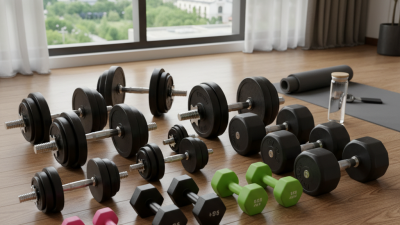
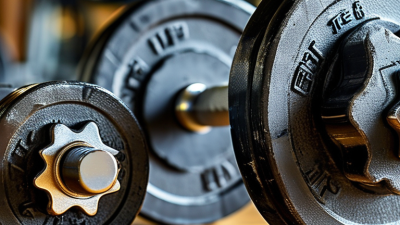
Choosing a China Top Gym Dumbbells Manufacturer requires more than comparing prices on a product page. The right supplier should understand commercial fitness equipment, user safety, and long-term performance. Gym Dumbbells may look simple, yet small differences affect training quality, maintenance, and customer satisfaction. Handle diameter, knurling depth, coating thickness, weight accuracy, and head balance all deserve careful attention.

Look closely at the factory’s actual production process. Ask whether steel is forged or cast, how weights are calibrated, and how each batch is inspected. A reliable manufacturer should provide clear material details, test records, packaging photos, and realistic production timelines. Visiting the facility, when possible, can reveal more than polished brochures. You may notice organized storage, calibrated scales, protective wrapping, and workers checking handle alignment.

Experience matters here.

However, supplier selection is rarely perfect. A factory may offer excellent dumbbells but weaker communication. Another may respond quickly while using inconsistent coatings. I have seen buyers focus heavily on unit cost and overlook replacement policies, carton strength, or port handling. That mistake becomes expensive when rubber edges arrive scratched or packages split during transport.

Consider your market, training environment, and expected order volume. Request samples before approving a large shipment. Compare several weights, not only one attractive sample. Discuss branding, color consistency, warranty support, spare stock, and inspection procedures in writing. A trustworthy partner should welcome reasonable questions rather than avoid them. The best choice is not always the cheapest manufacturer. It is the supplier that can repeatedly deliver safe, balanced, durable Gym Dumbbells with evidence to support every important claim.

China Top Gym Dumbbells Manufacturer How to Choose?

Define Your Dumbbell Requirements and Gym Usage Goals

Choosing dumbbells starts with defining how your gym will actually use them. A crowded commercial gym needs durable equipment, clear weight progression, and fast storage. A home studio may need compact pairs, quieter handling, and adjustable options. Write down the main users, training frequency, available floor space, and target exercises. Do not begin with appearance.

The World Health Organization recommends muscle-strengthening activities on two or more days each week. This supports selecting weights for regular, progressive training rather than occasional demonstrations. ACSM’s Worldwide Survey of Fitness Trends 2024 also placed traditional strength training among the leading fitness trends. That data reflects strong demand, but it does not identify the perfect dumbbell for every facility. Usage decides that.

Test the dumbbells before ordering large quantities. Check the grip diameter with sweaty hands. Place them on rubber flooring and listen for excessive movement. A commercial facility may need fixed dumbbells from light rehabilitation weights to heavy training loads. A smaller studio might prefer adjustable systems, but changing plates can interrupt group sessions. That matters. A first equipment plan may be wrong. Review attendance records after several weeks, then adjust the weight range and quantity. Leave enough space between racks for safe lifting and easy cleaning. Good specifications should serve real training behavior, not merely look impressive in a catalogue.

Evaluate Dumbbell Types, Materials, and Weight Options

Choosing a gym dumbbell manufacturer starts with use, not appearance. ACSM’s Worldwide Survey of Fitness Trends 2024 placed traditional strength training among the top five global trends. That demand requires practical product decisions. Fixed dumbbells suit busy commercial gyms and quick transitions. Adjustable dumbbells save space, but their locking systems need careful testing. Hex heads reduce rolling and support floor exercises. Round heads feel smoother during presses, yet they can move unexpectedly.

Material changes both lifespan and user experience. Cast iron offers strength at a lower cost. Rubber or urethane coatings reduce noise and protect floors. However, soft coatings may tear near sharp edges. I have seen attractive samples fail because handles became slippery after repeated cleaning. Ask the manufacturer for coating adhesion tests, dimensional tolerances, weld inspection records, and load-testing results. ISO 20957-1 provides useful safety guidance for stationary training equipment, although buyers should confirm the exact product scope. Grand View Research reported continued growth in the global home fitness equipment market, with space-saving equipment driving interest through 2030. This trend makes compact, durable designs more valuable.

Tips: Match weight options to user groups. Many facilities need 2.5 to 50 kilograms, while rehabilitation areas need lighter pairs. Request samples before placing a large order. Check knurling, balance, odor, packaging, and floor impact. Do not trust a polished catalog image alone. A minor handle flaw can become a daily complaint.

China Top Gym Dumbbells Manufacturer: How to Choose? — Evaluate Dumbbell Types, Materials, and Weight Options

Dumbbell Type Typical Construction Common Weight Options Main Advantages Limitations Best Use Key Selection Points
Fixed Hex Dumbbell Solid metal core with a hexagonal head, commonly finished with rubber, urethane, or iron. Usually available from approximately 1 kg to 50 kg per dumbbell, depending on the product range.
  • Hexagonal heads resist rolling.
  • Fast to pick up during circuit training.
  • Simple structure requires little maintenance.
Requires a separate pair for every weight and needs more storage space. Commercial gyms, strength training, group exercise, and functional circuits. Check head stability, handle knurling, coating durability, and weight tolerance.
Fixed Round Dumbbell Round metal heads with a steel, chrome-plated, rubber, or urethane exterior. Commonly offered from approximately 1 kg to 60 kg per dumbbell.
  • Smooth appearance and balanced feel.
  • Suitable for controlled lifting movements.
  • Many coating and handle options are available.
Round heads can roll when placed on the floor and may require a rack or tray. Traditional free-weight areas and bodybuilding-focused training. Choose a secure storage solution and verify that the heads do not loosen during use.
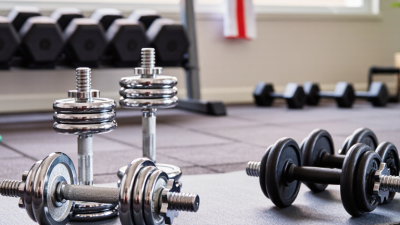
Adjustable Plate-Loaded Dumbbell Central handle with removable plates secured by spin-lock collars or similar locking hardware. Often adjustable from approximately 2 kg to 20–30 kg per handle, depending on plates and sleeves.
  • One pair can replace several fixed dumbbells.
  • Efficient for home gyms and limited storage areas.
  • Weight can be increased progressively.
Plates must be changed manually and collars require regular tightening. Home gyms, personal training, and users who need multiple weight levels. Inspect collar security, sleeve length, thread quality, plate fit, and changeover time.
Selectorized Adjustable Dumbbell Integrated weight plates selected with a dial, pin, lever, or locking mechanism. Many models provide approximately 2 kg to 24 kg or 2 kg to 40 kg per dumbbell.
  • Quick weight changes.
  • Compact compared with a full fixed-dumbbell set.
  • Useful for varied workouts.
More moving parts can increase maintenance needs; the mechanism may be unsuitable for dropping. Home fitness, personal training, and workouts requiring frequent weight changes. Prioritize locking reliability, selector visibility, handle comfort, and replacement-part availability.
Studio or Neoprene Dumbbell Light metal or cement-filled core covered with neoprene, PVC, or another soft-touch coating. Commonly available from approximately 0.5 kg to 10 kg per dumbbell.
  • Comfortable and easy to grip.
  • Soft coating helps protect floors.
  • Suitable for high-repetition movements.
Not intended for heavy strength training or dropping from height. Aerobic classes, rehabilitation, mobility work, and light home workouts. Check coating adhesion, odor, handle diameter, color consistency, and edge finishing.
Kettlebell-Style Dumbbell Compact weighted body with an integrated handle or handle-like grip configuration. Commonly offered in light to moderate ranges, often approximately 2 kg to 20 kg.
  • Supports swings, carries, presses, and dynamic movements.
  • Combines some features of dumbbells and kettlebells.
  • Easy to store when supplied as a compact design.
Grip and balance may feel different from a conventional dumbbell. Functional training, conditioning, and movement-based workouts. Evaluate handle clearance, center of mass, grip texture, and impact resistance.
Cast Iron Cast iron body, sometimes protected with paint, powder coating, chrome, rubber, or another finish. Available across light, medium, and heavy commercial weight ranges.
  • High density allows a compact size.
  • Strong and suitable for regular strength training.
  • Usually cost-effective.
Uncoated iron can scratch floors and may corrode in humid environments. Strength training areas where durability and compact dimensions are important. Request corrosion protection, dimensional inspection, surface-finish testing, and weight verification.
Rubber-Coated Cast iron or steel core covered with molded rubber. Commonly available from approximately 1 kg to 50 kg per dumbbell.
  • Reduces noise and floor impact.
  • Provides good durability for general gym use.
  • Offers improved visibility and handling comfort.
Rubber odor may be noticeable initially, and prolonged sunlight or harsh chemicals can affect the coating. Commercial gyms, home gyms, and general-purpose free-weight training. Check rubber bonding, odor control, surface uniformity, impact resistance, and indoor storage conditions.
Urethane-Coated Metal core with a molded polyurethane or urethane exterior. Often offered in medium and heavy commercial ranges, commonly up to 50 kg or more per dumbbell.
  • High resistance to abrasion and many common chemicals.
  • Low odor compared with many rubber products.
  • Professional appearance and long service life.
Usually costs more than basic iron or rubber-coated options. Premium commercial facilities and high-frequency training environments. Compare coating hardness, bonding strength, dimensional accuracy, and resistance to repeated impact.
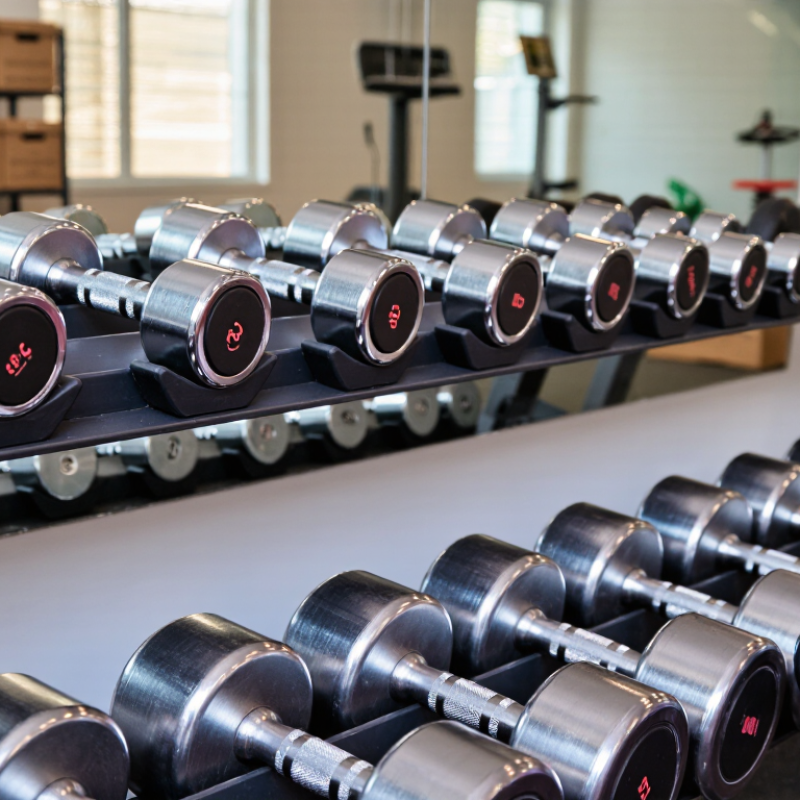
Chrome-Plated or Bare Metal Steel or cast iron with a polished, plated, or painted metal surface. Available across a broad range, commonly from approximately 1 kg to 40 kg per dumbbell.
  • Clean appearance and compact dimensions.
  • Easy to wipe and maintain when the finish is intact.
  • Suitable for controlled indoor use.
Hard surfaces can damage floors, and damaged plating may expose the underlying metal to corrosion. Low-impact strength training with appropriate racks and flooring. Inspect plating adhesion, corrosion resistance, handle finish, and compatibility with gym flooring.
Light Weight: 0.5–5 kg Typically studio, neoprene, PVC, or compact metal designs. 0.5 kg, 1 kg, 1.5 kg, 2 kg, 3 kg, 4 kg, and 5 kg are common increments. Suitable for beginners, rehabilitation, warm-ups, shoulder exercises, and high-repetition training. Limited loading potential for maximal strength development. Group exercise, physical therapy, light conditioning, and beginner programs. Choose comfortable grips, clear weight markings, and a coating that is easy to clean.
Medium Weight: 6–20 kg Commonly fixed rubber, urethane, cast iron, or adjustable designs. Often supplied in 1 kg, 2 kg, or 2.5 kg increments depending on the range. Provides a practical balance between muscle-building, conditioning, and general fitness exercises. May be insufficient for advanced lower-body or high-strength movements. General gym users, personal training, and progressive resistance programs. Match the range to the target users and confirm handle length, balance, and rack capacity.
Heavy Weight: Above 20 kg Usually fixed cast iron, rubber-coated, urethane-coated, or heavy-duty steel construction. Often available in 22.5 kg, 25 kg, 30 kg, 35 kg, 40 kg, 45 kg, and 50 kg options, with larger sizes available for specialized use. Supports advanced strength training and heavy compound exercises. Requires more floor space, stronger storage equipment, and careful handling. Advanced lifters, strength-focused gyms, and commercial weight rooms. Confirm structural integrity, handle strength, head attachment, storage-rack load rating, and impact policy.
Recommended Quality Checks Applies to fixed and adjustable dumbbells regardless of material or style. Verify the actual weight across representative samples from each size range.
  • Improves user safety and product consistency.
  • Reduces returns caused by coating or assembly defects.
  • Supports reliable long-term gym operation.
Testing adds time and cost before mass production or delivery. Product sourcing, commercial gym procurement, and quality-control programs.

Compare Chinese Manufacturers by Quality and Production Capability

China Top Gym Dumbbells Manufacturer How to Choose?

When comparing Chinese dumbbell manufacturers, inspect quality before judging price. Ask for steel grades, weight tolerances, and coating specifications. A reliable factory should provide inspection records for raw materials and finished products. Check whether each dumbbell is weighed individually or only sampled. Small differences become noticeable during repeated training.

Production capability requires more than a large workshop. Review forging equipment, machining lines, coating rooms, and assembly capacity. Ask for monthly output during peak seasons, not only normal periods. Visit the loading area if possible. It reveals packaging discipline and order flow. Strong manufacturers usually control key processes internally, reducing delays between suppliers. Still, bigger capacity does not always mean better consistency.

Request samples from different production batches. Examine handle knurling, weld marks, edge smoothness, and coating adhesion. Drop testing can expose weak joints, but it should follow a controlled method. Ask for test photos, records, and corrective actions. A polished showroom can mislead. I would also compare rejected-product rates, though factories may hesitate to share them. That hesitation deserves attention. Confirm carton strength, pallet protection, and replacement procedures before signing a purchase agreement. Production claims should match physical evidence.

How to Choose a Top Gym Dumbbell Manufacturer in China

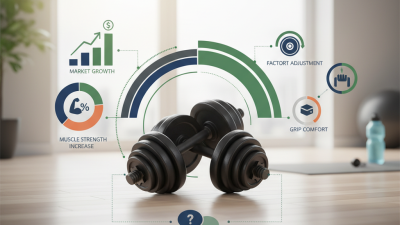
This normalized procurement benchmark compares common supplier-audit dimensions without using any company or brand data. Quality readiness covers traceability, weight consistency, surface durability, and load testing. Production capability covers monthly capacity, automation, customization, and export readiness. A higher score indicates stronger documented capability, not a guaranteed product result.

Check Certifications, Customization, Pricing, and Minimum Orders

China Top Gym Dumbbells Manufacturer: How to Choose?

Certifications should be checked before comparing prices. Ask for current ISO 9001 documents, material reports, and test records for coatings, handles, and welds. Product standards may differ by market, so verify whether the reports match your sales region. Request production photos and a sample inspection. A certificate alone cannot prove consistent quality. The dumbbell should feel balanced, with smooth edges and a secure handle. Small details matter.

Customization can include weight markings, handle texture, colors, packaging, and carton labels. Confirm whether changes require new molds or tooling fees. Ask for a digital proof before mass production. Pricing should show the full structure: unit cost, packaging, sampling, tooling, and shipping terms. A very low quote may exclude important costs. I have seen buyers focus too much on the listed unit price. That can be an expensive mistake.

Tips: Compare three written quotations using the same specifications. Ask about the minimum order quantity for each color, weight, and package style. Some manufacturers accept a small trial order, but customized items may require higher quantities. Confirm lead time, inspection procedures, replacement policies, and payment stages in writing. Leave room for testing. You may discover that a cheaper coating scratches more easily, or that attractive packaging increases freight costs.

Verify Samples, Delivery Terms, Warranty, and After-Sales Support

China Top Gym Dumbbells Manufacturer: How to Choose?

A reliable supplier must prove more than production capacity. Request physical samples before placing a large order. Check knurling, handle balance, coating thickness, and weight tolerance. Place each dumbbell on a calibrated scale. Small differences become noticeable during commercial training.

The Global Wellness Institute’s 2024 Global Wellness Economy Monitor valued the physical activity economy at about $1.1 trillion in 2022. This growth increases demand for dependable gym equipment and stronger supplier controls. Ask for inspection records, material details, and batch photographs. Testing should reference suitable standards, such as ASTM F2276 or EN ISO 20957. Reports without dates or test conditions deserve careful review. I have seen impressive samples fail during repeated impact testing. That mistake is expensive.

Delivery terms need precise wording. Confirm production time, loading date, shipping documents, packaging protection, and responsibility for damage. A written tolerance for delays prevents uncomfortable arguments later. Warranty coverage should state the period, excluded damage, replacement process, and response time. Ask whether spare handles, end caps, or coatings are available. After-sales support is often where supplier quality becomes visible. Request a named contact, service records, and a photo-based claim process. The 2023 Logistics Performance Index shows that international delivery reliability varies widely across markets. Therefore, do not judge a manufacturer only by a low quotation. My own preference is simple: accept a slightly higher cost when communication, inspection, and corrective action are clearly documented. I still review the contract twice. Mistakes happen. Silence makes them worse.